
Hakuba Snow Depth History: When Snow Starts and Builds
Category: Hakuba Village › Climate & Weather
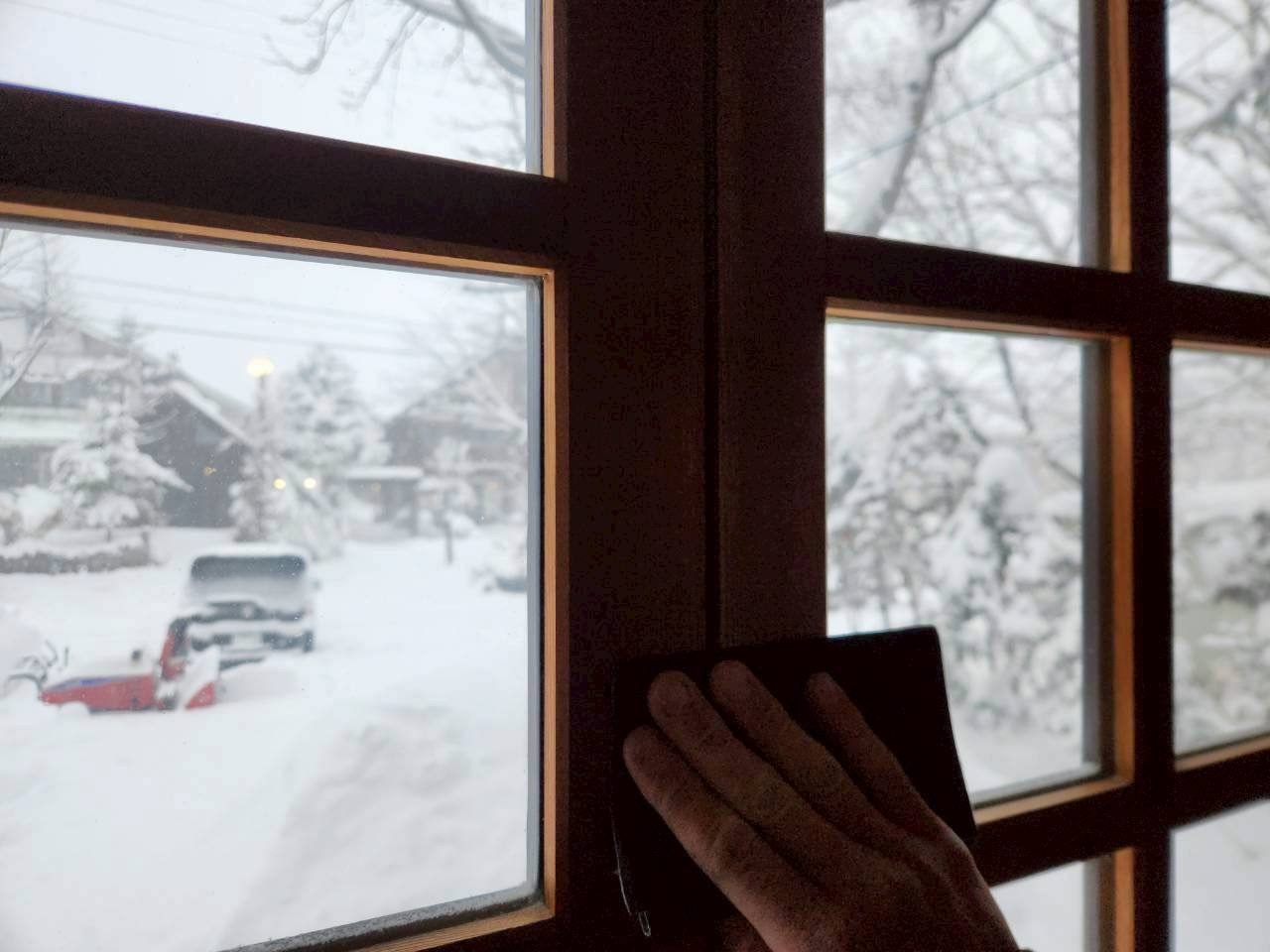
When does it snow in Hakuba? In our count of the last 10 winters at the Japan Meteorological Agency (JMA) station in Hakuba Village (703 m), the first day with at least 1 cm of snow on the ground fell between 18 November and 14 December, and the depth reached 50 cm in 7 winters. These are first recorded accumulation dates, not the dates of the first falling snow.
From 1 October to 12 November 2026, the station’s daily snowfall and snow depth were 0 cm. The figures below are counted by our editorial team from JMA daily values, one winter at a time. They describe one station on the valley floor, not the whole village or the ski slopes, and they do not predict the 2026-27 winter.
Hakuba snow depth history: the last 10 winters
In this article, “snow on the ground” means a daily maximum snow depth (最深積雪) of 1 cm or more at the station, and days at 50 cm or more are days whose maximum depth reached 50 cm.
| Winter | First day with snow on the ground | First day at 50 cm or more | Deepest snow, cm (date) | Days at 50 cm or more |
|---|---|---|---|---|
| 2016-17 | 8 Dec 2016 | 13 Jan 2017 | 90 (12 Feb 2017) | 60 |
| 2017-18 | 20 Nov 2017 | 24 Jan 2018 | 60 (25 Jan 2018) | 7 |
| 2018-19 | 12 Dec 2018 | 22 Jan 2019 | 71 (29 Jan 2019) | 9 |
| 2019-20 | 6 Dec 2019 | Not reached | 28 (10 Feb 2020) | 0 |
| 2020-21 | 5 Dec 2020 | 1 Jan 2021 | 74 (9 Jan 2021) | 13 |
| 2021-22 | 27 Nov 2021 | 19 Dec 2021 | 102 (22 Feb 2022) | 72 |
| 2022-23 | 14 Dec 2022 | 30 Jan 2023 | 55 (30 Jan 2023) | 2 |
| 2023-24 | 18 Nov 2023 | Not reached | 42 (10 Mar 2024) | 0 |
| 2024-25 | 29 Nov 2024 | 28 Dec 2024 | 121 (9 Feb 2025) | 82 |
| 2025-26 | 3 Dec 2025 | Not reached | 45 (25 Jan 2026) | 0 |
Source: JMA, Hakuba station (AMeDAS 0396), daily values, October to May of each winter; our count. Where the deepest value occurred more than once, the first date is shown. Snow-depth values are missing for 14–21 December 2017; no date in the table falls in that gap, and day counts cover the days with recorded values.
Snow was on the ground before 1 December in 4 of the 10 winters. The first day at 50 cm or more came as early as 19 December (2021) and as late as 30 January (2023). Only two winters reached 100 cm or more; the first days at that depth were 21 February 2022 and 15 January 2025.
The JMA’s 1991–2020 normal for a year’s deepest snow at this station is 100 cm. In 8 of the last 10 winters, the deepest snow stayed below that. Across the 10 winters, the deepest snow averaged 68.8 cm (our arithmetic), with a range of 28 cm to 121 cm.
The last day with snow on the ground ranged from 23 February (2026) to 23 April (2020). For what that means for tyres, see driving to Hakuba in winter.
When does it snow in Hakuba, and how much?
In the JMA’s 1991–2020 normals for the station, November has 14 cm of total snowfall and a 7 cm maximum depth, December has 130 cm and 46 cm, and January has the most snowfall (216 cm). Our Hakuba weather by month guide has the full monthly table.
Snowfall and snow depth measure different things. Snowfall (降雪の深さ) adds up the depth of new snow; snow depth (積雪) is how deep the snow on the ground is, after it settles and melts. A winter with a lot of snowfall can still have a modest depth.
The station is on the valley floor. Happo-One’s snow readings come from its gondola base station (770 m), Usagidaira (1,400 m) and Kurobishi (1,680 m), and the ski area’s highest point is 1,831 m. Expect the slopes and the village to report different depths on the same day.
Hakuba first snow on the peaks: is there a JMA date for 2026?
Not from the JMA. Snow-capping (冠雪) means snow, graupel or similar settling near a summit so that it looks white, whatever the amount. The JMA gives first snow-capping (初冠雪, hatsukansetsu) for 44 mountains, and the list includes no Hakuba peak. The mountain assigned to the Nagano observatory is the Tōhō Renzan (東方連山), with a first snow-capping date of 28 October 2026. The JMA lists 27 October 2026 for Tateyama, which is assigned to the Toyama observatory.
From the 2027 cold-season year (1 August 2026 to 31 July 2027), the JMA uses analysed snow depth (解析積雪深) instead of visual observation to report snow on the summits. The agency says these dates cannot be simply compared with the earlier visual records.
Hakuba snow forecast: what the official outlook says
The JMA’s three-month and cold-season forecasts for the Kanto-Koshin region have no snowfall category, and they are regional, not forecasts for Hakuba itself. The three-month forecast for the Kanto-Koshin region, which includes Nagano Prefecture, was issued on 20 October 2026. For November 2026 to January 2027 it gives:
| Item | Below normal | Near normal | Above normal |
|---|---|---|---|
| Mean temperature (%) | 10 | 30 | 60 |
| Precipitation (%) | 20 | 30 | 50 |
Source: JMA seasonal forecast, Kanto-Koshin, issued 20 October 2026. For December and January on their own, the chance of above-normal temperature is 50% in each month.
The same issue says the winter (December–February) forecast from 18 September is unchanged: above-normal temperature at 60% and above-normal precipitation at 50%. Neither this three-month forecast nor the cold-season forecast for Kanto-Koshin has a snowfall category, so they do not say how much snow Hakuba will get. The next three-month forecast is due on 24 November 2026 at 14:00 JST.
If you use a third-party snow forecast, check who issued it, when, and for which period. For observed conditions, use the resort reports below.
Where to check Hakuba snow depth now
- Hakuba Valley’s weather and snow page lists the snow depth at each of its ski resorts, with the time of each update.
- Happo-One’s home page shows snow depth and new snow at its three stations; its slope conditions page gives a status for each run; when we checked on 13 November 2026 it still showed a 19 April 2026 update, so check its timestamp first.
- For the village floor, the JMA daily values for the Hakuba station show each day’s snowfall and depth.
- For planned opening dates, see Hakuba ski season dates, then check each resort’s latest announcement.
Things to check when you read Hakuba snow numbers
- Check whether a number is snowfall or snow depth.
- Check the elevation. A reading at Kurobishi (1,680 m) is not a measurement of snow on a village road or property.
- Check the date of the reading. On 13 November 2026, Happo-One’s home page still showed readings last updated on 3 November.
- Do not treat one winter as a trend. The table above includes both the deepest (121 cm) and shallowest (28 cm) winters of the decade.
Snow and keeping a house in Hakuba
For an owner, these station records are background for planning winter maintenance, not a clearing schedule for a particular house. In Hakuba Land’s count, the station had 82 days at 50 cm or more in 2024-25 and none in 2025-26.
Our guide to running costs when you buy in Hakuba covers the winter work an owner needs to arrange. If you go on to build, our long-term partner builders handle the construction, with us coordinating their work.
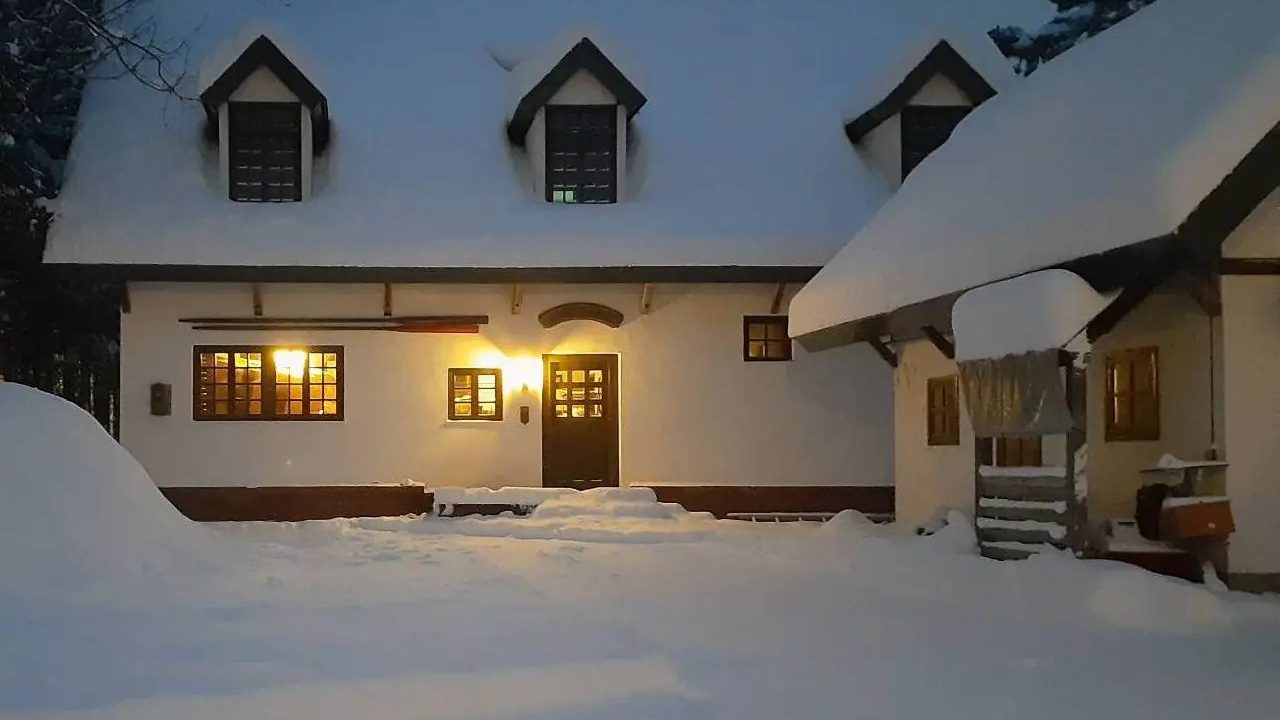
Disclosure: the hero photo was taken from inside Maykiss, a chalet in Hakuba owned by Gemini株式会社.
Sources
- Japan Meteorological Agency: daily values, Hakuba station (AMeDAS 0396), October to May, 2016-17 to 2025-26, and autumn 2026; Hakuba normals 1991–2020
- Japan Meteorological Agency: first snow-capping records; press release on the new method (31 July 2026)
- Japan Meteorological Agency: seasonal forecasts (three-month forecast issued 20 October 2026; cold-season forecast issued 18 September 2026)
- Hakuba Valley: weather and snow information; Hakuba Happo-One: home page
Last checked: 13 November 2026.
Related guides
-
Hakuba Weather by Month: Temperature, Precipitation, Snow
Hakuba weather by month from JMA 1991–2020 normals: temperature, precipitation, sunshine and snow, plus how much the last two winters differed.
-
Hakuba Ski Season Dates 2026-27: When Each Resort Opens
Hakuba ski season dates for 2026-27: planned opening and closing days for Hakuba Valley's resorts, early and spring ticket periods, and JMA snow data by month.
-
Driving to Hakuba in Winter: Snow Tyre Dates and Rules
When does Hakuba need studless tyres? Snow-cover and sub-zero dates from 11 winters of JMA data, Nagano's tyre rule, chain-only rules and rental car months.
-
Buying a House in Hakuba: Yearly Running Costs and Checks
Buying a house or chalet in Hakuba? See the yearly running costs from official tariffs, the winter work an absent owner must arrange, and what to check first.