
Buying a House in Hakuba: Yearly Running Costs and Checks
Category: Buying Property · Start here: Can Foreigners Buy Property in Hakuba? 2026 Buyer Guide
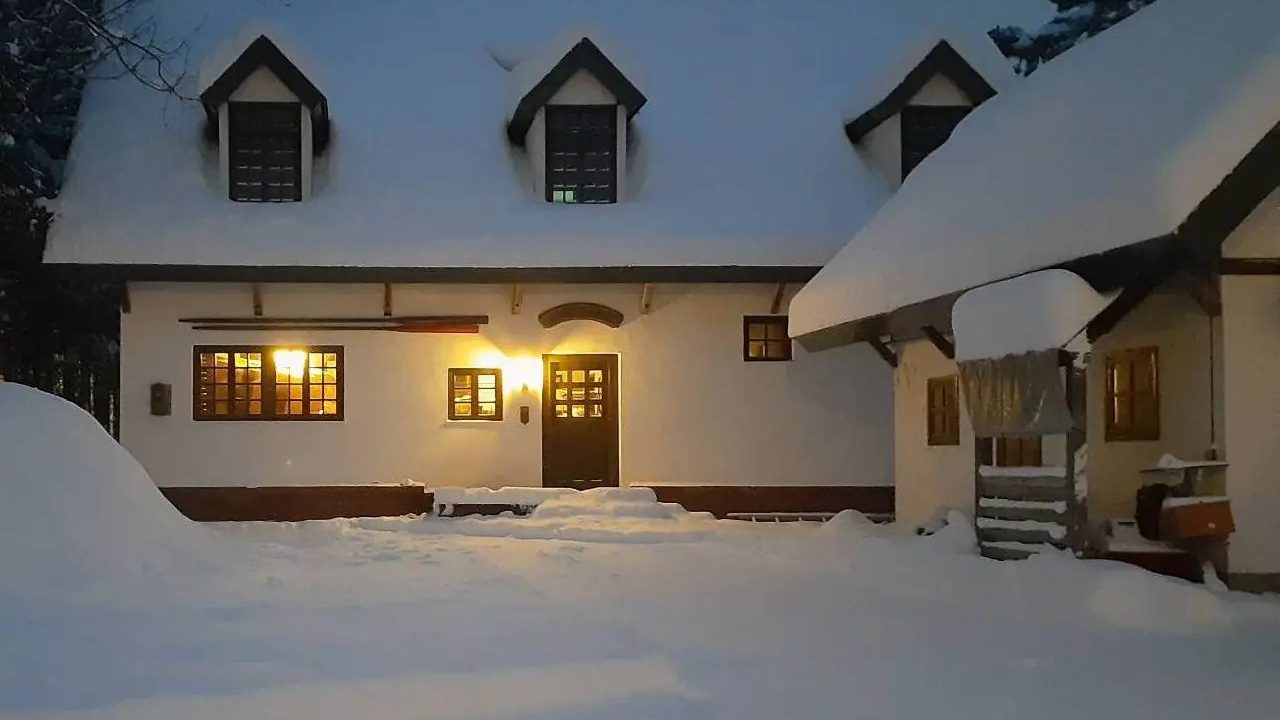
When you buy a house in Hakuba, the yearly costs are fixed asset tax at 1.4% of a taxable value based on the village’s assessment (not your price), water and sewer charges or a septic tank’s legal upkeep, any estate or condo fees, insurance and utilities, and winter work such as draining pipes and clearing snow. The official sources we reviewed give no single annual total: some items have published tariffs, the rest need quotes for the actual house.
Overseas buyers can find the purchase steps and one-off costs in our guide to buying property in Hakuba as a foreigner.
What are the yearly costs when you buy a house in Hakuba?
Use the table as a budget worksheet. Published figures are as of 31 October 2026; “not published” means the pages we checked give no amount, not that the cost is zero.
| Cost | Who sets it | Published figure (31 Oct 2026) | How to get your yearly figure |
|---|---|---|---|
| Fixed asset tax (固定資産税) | Hakuba Village | 1.4% of the taxable value (where taxable; exemptions may apply) | Seller’s latest tax notice; village assessment certificate |
| City planning tax (都市計画税) | Hakuba Village | Not collected | Ordinance Art. 7 pauses it “for the time being” |
| Water | Hakuba Village | ¥1,837 a month basic (13 mm meter) + usage from ¥71.5 per m³, tax included | Meter size and past bills |
| Public sewer (where connected) | Hakuba Village | ¥1,700 a month up to 10 m³ + 10% tax | Volume = mains water used, plus well water where used |
| Septic tank (where installed) | Licensed contractors; designated inspection body | Not published | Contractor and inspection quotes |
| Villa-estate management | Each estate office, by contract | Not published on Misorano’s pages | Management contract and invoice |
| Condo management fee and repair reserve | Each owners’ association | Per building | Association’s statement |
| Insurance, heating, electricity | Insurers and suppliers | No amount in the sources reviewed | Quotes and past bills for the house |
| Snow clearing and repairs | Contractors or estate office | Not published | Quotes; seller’s records |
Sources: Hakuba Village fixed asset tax page (tax rate), water tariff page and sewer tariff page; Hakuba Village City Planning Tax Ordinance Art. 7; Misorano management office pages (all checked 31 Oct 2026).
Hakuba Land calculation from the village tariffs: a house connected to the public sewer, with a 13 mm meter and no well, that uses 20 m³ in a month pays ¥4,500 for water (¥4,504.5 before the village drops amounts under ¥10) and ¥3,740 for sewer, ¥8,240 in total for that month.
Your yearly holding budget can be laid out like this, with each line filled from the documents above (leave a line blank until you have the figure):
- Annual fixed asset tax (from the tax notice)
-
- 12 months of water bills
-
- 12 months of public-sewer bills, or septic tank maintenance, cleaning and statutory inspection
-
- Estate management fees and/or condo management fees and repair reserve, where applicable
-
- Winter services (draining, snow clearing) not already in those fees
-
- Insurance, heating and electricity
-
- Your own repair allowance (for a condo, only for work the repair reserve does not cover)
- = Annual holding budget
Chalet, villa estate or condo: how do the running costs differ?
The type of property changes which costs you carry and who does the winter work.
| Detached house on the sewer | House in a villa estate (e.g. Misorano) | Resort condo | |
|---|---|---|---|
| Wastewater | Public sewer, billed monthly | Check: the village’s summary dated 31 Mar 2022 put Misorano, Meitetsu and Donguri in the suspended 4th phase of the sewer plan | Depends on the building; ask |
| Snow on access and parking | Confirm who maintains the road; arrange private access and parking | Misorano clears estate roads; parking and roof clearing are paid extras | Ask what the fees cover |
| Regular charges to check | Utilities and any contracted services | Estate management fee (contract) and utilities | Management fee, repair reserve and utilities |
| First document to ask for | Sewer connection record | Estate management contract and building rules | Long-term repair plan and reserve balance |
Sources: Hakuba Village sewer summary (as of 31 March 2022); Misorano management office pages; MLIT repair reserve guideline (June 2024 revision).
Besides public sewer and septic tanks, the village summary lists agricultural community drainage, which then covered only the Nodaira district. Confirm the current arrangement for the exact lot.
If the house has a septic tank, the Septic Tank Act requires its manager to have it maintained and cleaned once a year (or at the frequency set by ministry rules where applicable) and inspected by a designated body once a year (or as ministry rules set for specified tanks), except while a notified suspension of use is in effect.
For a condo, Japan’s Ministry of Land, Infrastructure, Transport and Tourism (MLIT) gives a reference repair reserve of ¥335 per m² per month: the average over a repair-plan period, excluding mechanical parking, for buildings under 20 floors and under 5,000 m² of total floor area.
For a 60 m² unit that is ¥20,100 a month, or ¥241,200 a year, before management fees. The guideline’s sample mainly comprises owner-occupied residential condos, so for a resort condo it is a reference point only.
Winter in Hakuba: what an absent owner has to arrange
Hakuba Village has been designated a special heavy-snow area (特別豪雪地帯) since 10 April 1973. Include winter preparation and snow work in the yearly budget.
Water pipes
The village warns that at −4 °C or below, water in pipes can freeze and burst pipes and meters. Everything on the house side of the meter is the owner’s responsibility.
If you leave the house for a long time in winter, the village asks you to drain the water. First have the seller or a village-designated plumber show you this house’s procedure.
The village’s outline: for an outdoor frost-proof stop valve, close the taps, turn the handle fully to the right, then open the taps to let air in; for an indoor drain valve, pull the lever and open the taps. Afterwards, check the meter has stopped, because a half-turned valve can keep leaking.
Water heaters and toilets keep water inside, so drain them too. Leaving a tap running to prevent freezing can lead to a very large bill.
The village’s leak relief does not cover every winter leak. It applies only where the owner kept up proper maintenance, including draining during long absences, and the leak was in a place that cannot be seen, such as underground or inside a wall, and was hard to find.
Leaks from a broken tap, shower or toilet are excluded, as are repairs by anyone other than a village-designated plumber and repeat leaks at the same spot within a year. Where relief applies, it covers two-thirds of the leaked water volume, for up to 6 months per leak, and you apply within 60 days of the repair. Properties whose meters are not read during the winter provisional period should consult the village.
Roof snow
Nagano Prefecture classifies houses by how they deal with roof snow: snow-clearing, self-shedding, snow-melting and snow-resistant types. Some buildings were designed for a lower snow load on condition that the roof is cleared, and the prefecture asks owners of those buildings to keep clearing them. Ask which type the house is before you buy, because it affects how much snow work it needs each winter.
Who does the work
In the Misorano estate, the management office lists a pre-snow check of each villa (draining pipes, topping up antifreeze), normally clears estate roads so they are passable by about 7 a.m., and offers parking and roof clearing as paid extras. Confirm which of these your contract covers. Outside this example, confirm whether the owner, an estate office, the condo association or a contractor handles each task.
Taxes: what changes when it is a holiday home?
Fixed asset tax is calculated on the village’s assessment, not on what you paid. Residential land (宅地) is assessed with about 70% of official land prices as the target, and buildings at replacement cost less depreciation. Check this property’s actual figure on the seller’s latest tax notice or the village’s assessment certificate. Our Hakuba property tax guide explains the calculation.
One important tax difference for a holiday home concerns the land. Land that qualifies as residential land on 1 January gets the residential-land reduction: the taxable base is one-sixth of the assessed value on up to 200 m² per dwelling and one-third above that.
Land under a house used wholly as a holiday home (別荘) does not get it. Under the tax rules, a holiday home is a house or part of one used exclusively for leisure and not lived in at least one day a month (or to an equivalent degree).
The same applies to land under a house used exclusively for living in where the holiday-home part is more than three-quarters of the floor area. The village decides the classification, so confirm your case with it or a tax accountant.
The assessment date and tax-agent arrangements also matter. In principle, that year’s tax is charged to the person recorded as owner on 1 January in the land registry or, for unregistered buildings, the village’s supplementary tax ledger (Local Tax Act Arts. 343 and 359). If the transfer has not been registered by then, the seller may still be taxed.
If you have no address, residence, office or business premises in Hakuba, Local Tax Act Art. 355 requires you to name a tax agent (納税管理人) and notify the village, or get approval if the agent lives outside the area set by village ordinance, unless the mayor certifies that collection is not at risk; the village says an agent is needed when the owner moves abroad. Confirm your circumstances with the village or a tax professional. Under the village tax ordinance that area is Hakuba itself, notice is due within 10 days, and it also covers owners living elsewhere in Japan.
Can renting it out cover the costs?
First check whether the rental use you have in mind is allowed, then estimate what it would contribute. A minpaku (home-sharing) notification allows at most 180 days of operation a year. If the host does not live in the house, management must be entrusted to a registered minpaku management company.
In parts of Kamishiro and Hokujo in Hakuba (including Kurashita, as listed in the prefectural rules), Nagano’s minpaku ordinance (Art. 5) and its rules (Appended Table 6) stop minpaku from 1 December to 31 March. The exception, set in a note to that table, is when the operator lives in the same building, on the same site or next door and stays present, or a registered management company is stationed the same way. Across Nagano, minpaku is also restricted on weekdays within about 100 m of schools and nurseries. A licence under the Inns and Hotels Act has no annual night cap, but restricts where the business can be located.
For the numbers, rental contribution = booking revenue − costs that come only from renting (platform fees, rental management, cleaning, extra utilities and upkeep). Annual surplus or shortfall = rental contribution − annual holding budget. Count each shared cost once only. The booking total is not what you keep, and the 180-day limit is not an occupancy forecast.
Since 1 June 2026, guests also pay Hakuba’s accommodation tax: from 1 June 2026 to 31 May 2029, ¥200 per person per night for a room-only rate (before tax) from ¥6,000 to under ¥20,000, including the prefecture’s ¥100, with higher bands above that.
The operator collects it and, in principle, files and pays by the end of the following month. See minpaku versus an inn licence and the Hakuba accommodation tax.
Things to check before you buy a house or chalet in Hakuba
- Wastewater: Is the house connected to the public sewer? If it has a septic tank, ask for the maintenance and cleaning records (the tank’s legally responsible manager must keep them for 3 years) and the annual inspection results.
- Water: Find the meter, the frost-proof valve and the drain points. Ask who drained the house last winter and whether any leak repairs were made.
- Roof type: Snow-clearing, self-shedding, snow-melting or snow-resistant? Ask whether the design assumed regular roof clearing.
- Estate rules: Read the management contract to see what the fee covers, what is extra and what the office is not liable for. Check building limits too. When Hakuba Land reviewed one Misorano house we list (HL-0002), the listing showed 60% coverage and a 200% floor-area ratio, while the village’s table for that villa area lists 20% and 40% for sites up to 500 m². Ask the estate office and the village which limits apply to the lot.
- Registration: The Misorano office says quite a few holiday and rural houses lack an ownership preservation registration (所有権保存登記). The village’s tax ledger shows who is recorded for tax; have a judicial scrivener confirm title and the registration steps.
- Tax: Ask the seller for the latest tax notice and the village for an assessment certificate.
- Rental use: if you plan to rent, ask whether the estate rules or the condo’s bylaws allow it.
- Condo: Get the long-term repair plan, the current reserve balance and any unpaid fees.
- Change of use: Tell the village water section before the transfer and when the use changes, for example from home to holiday home.
- Winter viewing: if you can, see the house in winter, when snow piles, roof shedding and road access show what you will deal with.
Choosing a house you can look after from afar
When comparing houses, weigh the management contract, the wastewater system and the winter work alongside the price. Hakuba Land, a brand of Gemini株式会社 (a licensed real estate broker), helps buyers compare Hakuba properties on these points before an offer; partner listings show the transaction type.
If a house needs work for snow or plumbing, our long-term partner builders carry out the construction and we coordinate. Management for outside owners is in preparation and not yet available. Current listings are on our properties page.
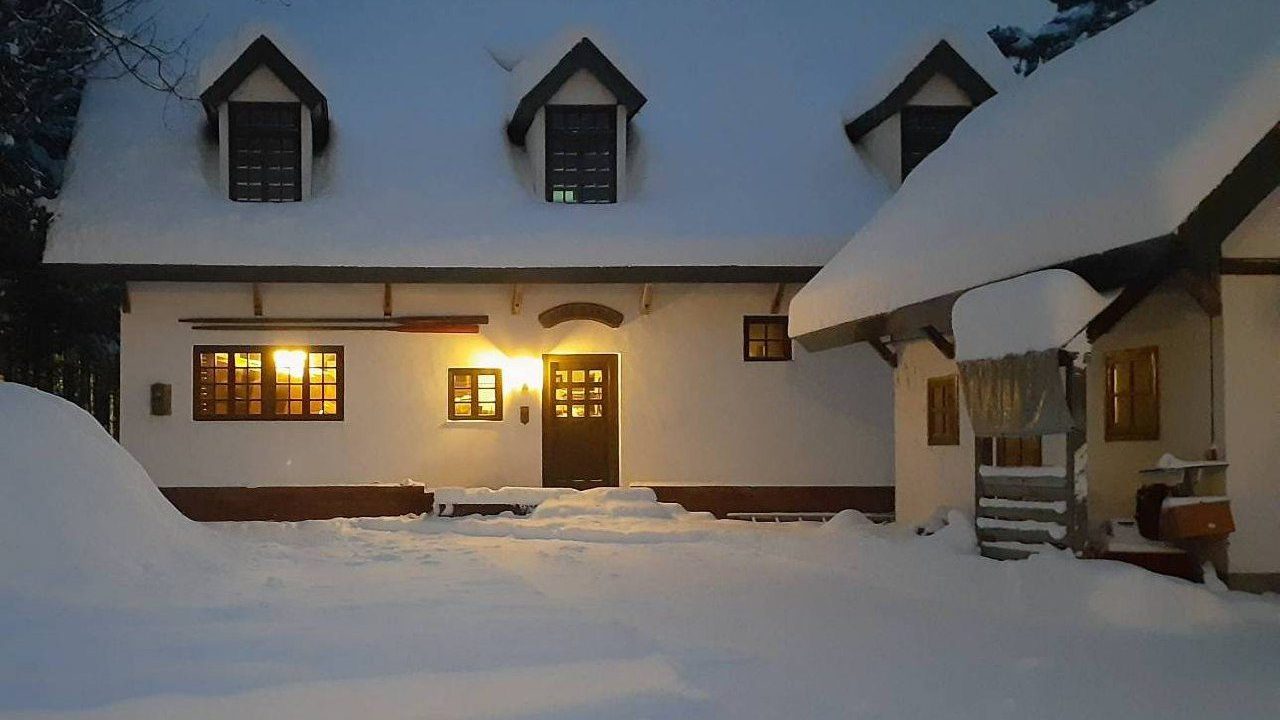
Gemini株式会社 owns the chalet Maykiss in Hakuba, shown in the cover photo.
How we checked: tariffs, rules and dates were checked against Hakuba Village’s tax, water, sewer and septic pages, the village sewer summary, the Septic Tank Act, Nagano Prefecture’s snow plan and minpaku rules, MLIT’s repair reserve guideline and the Misorano management office pages on 31 October 2026. Charges can change; check the official pages before you budget, and confirm tax and licensing questions with a professional.
Cover photo: Maykiss in winter, from Gemini株式会社’s own photo library.
Frequently asked questions
Can I suspend the water supply while the house is empty?
Yes, but tell Hakuba Village's water and sewer section in advance. Reopening after a suspension costs ¥5,000 if it was suspended for up to 6 months and ¥10,000 if longer, and the section does not open or close supplies on weekends, public holidays or over the New Year break.
Can I multiply the ¥8,240 example by 12 to get a yearly figure?
No. It is one month's water and sewer bill for a sewer-connected house with a 13 mm meter using 20 m³. Winter use, a septic tank instead of sewer, a larger meter or well water all change it, and it leaves out tax, fees, insurance and snow work.
Related guides
-
Can Foreigners Buy Property in Hakuba? 2026 Buyer Guide
Can foreigners buy property in Hakuba? Yes. Here is the 2026 process, costs, the new non-resident reporting rule, land price data and Hakuba-specific checks.
-
Japan Property Tax for Foreigners: A Hakuba Owner's Guide
Hakuba property tax is 1.4% of the taxable base, not the price. Assessed values, why legal holiday homes miss land relief, and tax agents abroad.
-
Hakuba Airbnb Rules: Minpaku Limits vs an Inn Licence
Hakuba minpaku is capped at 180 nights a year, and parts of Kamishiro and Hokujo are restricted 1 Dec–31 Mar, with exceptions. How an inn licence compares.
-
Hakuba Accommodation Tax: Rates per Night & Chalet Guide
Hakuba accommodation tax is ¥200–¥1,900 per person per night on room charges of ¥6,000+ before consumption tax. Chalet examples, exemptions and owner rules.
-
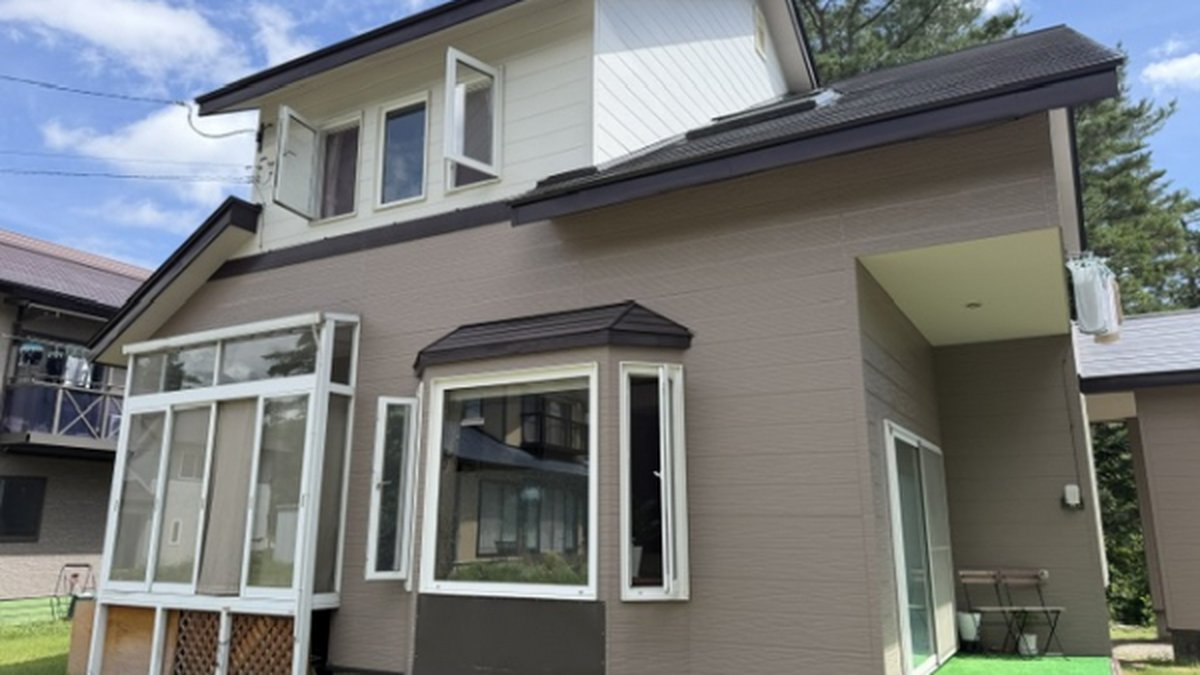
Hakuba House for Sale in Misorano: Sunny 4LDK Corner Home
Listing HL-0002: a 1997 two-storey 4LDK+S house on a 291 m² corner lot in Misorano, Hokujo, Hakuba, for ¥72,000,000. Sunroom, roof balcony, two public roads.