
Japan Property Tax for Foreigners: A Hakuba Owner's Guide
Category: Tax, Law & Visas
Japan property tax for foreigners follows the same rules as for Japanese owners, and on a Hakuba home it is not a percentage of what you paid. Hakuba Village sets an official assessed value (固定資産税評価額), turns it into a taxable base, and charges 1.4% of that base each year (Hakuba Village).
The tax, called fixed asset tax (koteishisan-zei), falls on whoever owns the property on 1 January and is paid in four instalments. The ordinary instalment months are April, July, December and February; the fourth payment for fiscal 2026 is due on 1 March 2027.
Land beneath a building used entirely as a holiday home as the law defines it (bessō: used exclusively for recreation and not used as a residence at least one day a month, or to an equivalent extent) does not get the residential-land relief of 1/6 or 1/3 of the value; mixed-use properties follow separate rules. Owners with no address or office in the village generally must appoint a tax agent.
In the hypothetical calculation below (not typical Hakuba tax amounts), the same land and house come to about ¥177,000 a year as a primary home and about ¥197,000 as a holiday home, before any lower land burden-adjustment amount and before new-build reduction. To estimate your own annual bill before buying, check three things:
- The property’s assessed value (on the tax statement or a valuation certificate)
- Whether you will live there, use it as a holiday home, or run it as lodging, because the relief depends on it
- Who will be the registered owner on 1 January, and who will be your tax agent if you live abroad
Japan property tax for foreigners: how is it calculated in Hakuba?
The tax is the taxable base × 1.4%. The base is normally the value recorded in the village’s fixed asset tax ledger. Where the residential-land relief or the land burden adjustment applies, the adjusted figure is used instead (Hakuba Village; Local Tax Act Arts. 349-3-2 and 350).
| Asset | How the value is set | Taxable base |
|---|---|---|
| Land | Valued by land category under the national assessment standards, in a base year every 3 years | The value; 1/6 or 1/3 for residential land; burden adjustment applies |
| Building | Replacement cost × depreciation factor for age | Normally the value |
| Depreciable assets (business furniture, equipment) | Cost minus depreciation by years held (minimum 5% of cost) | The value |
Source: Hakuba Village pages on land and buildings; Ministry of Internal Affairs and Communications (MIC) overview. Depreciable assets must be declared to the village by 31 January each year (Hakuba’s English guide).
No tax is charged on a category if one owner’s total taxable base in the village for that category is under ¥300,000 for land, ¥200,000 for buildings, or ¥1.5 million for depreciable assets, each assessed separately (Local Tax Act Art. 351). From fiscal 2027 the building and depreciable-asset thresholds rise to ¥300,000 and ¥1.8 million (MIC).
City planning tax (toshi keikaku-zei, capped at 0.3%) can be levied only in designated planning areas (Arts. 702 and 702-4). Hakuba Village has a City Planning Tax Ordinance (Ordinance No. 7 of 1962): Article 1 provides for the tax, but Article 7 says it shall not be assessed or collected for the time being.
When Hakuba Land checked the village’s list of taxes and tax calendar on 27 October 2026, neither showed a city planning tax. Unless the ordinance is amended, it is not collected; still check your own tax statement.
How is the assessed value different from the price you pay?
The assessed value is set by the mayor by 31 March each year, separately from any sale (Art. 410). Your actual purchase price does not feed directly into it.
- Land: building land (宅地) is assessed with a target of about 70% of officially published land prices (地価公示価格) and similar benchmarks (MIC). This 70% is about the level of the value itself; it is separate from the 70% cap on the taxable base described below. The land category is judged by its actual use on 1 January, not by the registry (Hakuba Village).
- Buildings: the cost of rebuilding the same building today, reduced for age. If a revaluation would push the value above the previous one, the previous value is normally kept (Hakuba Village).
- Timing: values are reviewed every 3 years, and the next base year is fiscal 2027 (Art. 341(6)). The building assessment standards were revised in June 2026, with the changes applying from fiscal 2027 tax (MIC).
So a budget built on “price × 1.4%” can be far from the bill you receive. For land-price trends, see our Hakuba land price 2026 guide.
How do holiday homes, primary homes and lodging differ?
Land relief applies only to residential land: land that, as of 1 January, serves as the site of a home used for people to live in. Hakuba Village lists the sites of shops, inns and other business buildings, vacant plots (including plots where a house is planned) and land with a house under construction as non-residential. Certain sites where an existing home is being rebuilt can still count as residential (Hakuba Village).
Holiday homes are excluded by cabinet order. Land under a house used entirely as a holiday home, or a house whose holiday-home part exceeds three quarters of the floor area, is not residential land (Enforcement Order Art. 52-11).
A holiday home here means a house used exclusively for recreation and not lived in at least one day a month or to an equivalent extent (Order Art. 36(2); Enforcement Rules Art. 7-2-16). Not every property marketed as a chalet or villa falls into this category. Ask the village tax section how it classifies your intended use.
| Use | Land taxable base | New-build reduction (building) |
|---|---|---|
| Qualifying residential use (primary home, a second home lived in at least 1 day a month, apartments) | Value × 1/6 for the first 200 m², × 1/3 above that (up to 10× the floor area) | Half off, on up to 120 m², usually for 3 fiscal years, if eligible |
| Holiday home as legally defined | No relief; building land capped at 70% of value in fiscal 2024–2026 | Not eligible (holiday-home parts do not count as residential) |
| Wholly lodging or other business use, vacant plot, under construction | No relief; building land capped at 70% of value in fiscal 2024–2026 | Not eligible (not a house) |
| Mixed home and lodging | Residential part (excluding holiday-home use) 1/4 to under 1/2: 0.5 of the site counts as residential; 1/2 or more: 1.0 (different rates for fire-resistant buildings of 5+ storeys) | Possible if the residential part is at least 1/2 |
Source: Local Tax Act Art. 349-3-2, Supplementary Provisions Arts. 15-6 and 18; Enforcement Order Art. 52-11 and Supplementary Art. 12; Hakuba Village land page. The cited rules classify land by qualifying use, not by the property’s marketing name. Confirm mixed residential and lodging use with the village.
The new-build reduction halves the building tax on eligible houses whose residential part is at least half the floor area, among other conditions.
For houses newly built between 1 April 2022 and 31 March 2031 it runs for 3 fiscal years. For houses in fire-resistant or quasi-fire-resistant buildings with 3 or more storeys above ground built between 1 April 2024 and 31 March 2031, it runs for 5. Either way, it starts with the fiscal year in which fixed asset tax is first imposed on the house (MLIT; Supplementary Art. 15-6).
For houses newly built on or after 1 April 2026 the floor area must be 40–240 m², applying from fiscal 2027 tax; houses built before then keep the old requirement (Order Supplementary Art. 12; Cabinet Order No. 83 of 2026, Supplementary Art. 6(3)). The village’s own page still shows the older conditions, so confirm with the village when you build.
After building, extending, rebuilding or wholly or partly demolishing a home, changing the use of all or part of a building, or changing how the land is used, the landowner as of 1 January files a residential-land declaration by 31 January of the following year (Hakuba Village).
Worked example: the same land and house, two uses (fiscal 2026 rules)
These are made-up figures to show the mechanics: a 300 m² building plot assessed at ¥3,000,000 and a 120 m² two-storey timber house assessed at ¥12,000,000.
| Item | Primary home | Holiday home |
|---|---|---|
| Land taxable base | 200 m²: ¥2.0m × 1/6, plus 100 m²: ¥1.0m × 1/3 = about ¥667,000 | Cap: ¥3.0m × 70% = ¥2.1m |
| Land tax (upper limit) | about ¥9,300 | about ¥29,400 |
| Building tax | ¥168,000 (¥84,000 during the reduction) | ¥168,000 |
| Total (approx.) | about ¥177,300 (¥93,300 during the reduction) | about ¥197,400 |
Source: editorial calculation using Local Tax Act Arts. 349-3-2 and 350, Supplementary Art. 18 and Hakuba’s method. The burden adjustment can make the actual land figure lower. Rounding ignored. The reduced figure assumes an eligible new-build house still within its relief period; the land figures assume the classification shown in each column.
This example covers land and buildings only; a lodge may also pay tax on depreciable assets such as furniture and equipment.
If you assumed a ¥50 million purchase price here and budgeted ¥50m × 1.4% = ¥700,000, you would get the wrong figure. The tax depends on the assessed value, any applicable relief and the land burden adjustment. The burden adjustment in Supplementary Art. 18 covers fiscal years up to 2026, so check the current rules for fiscal 2027 onward.
Who pays, when, and how?
The taxpayer is whoever is registered as owner on 1 January. If a sale has not been registered by 1 January, the previous owner is taxed for that fiscal year (Hakuba Village; Arts. 343 and 359). How buyer and seller share that year’s tax is a contract point, so check it before you sign.
| Instalment | Fiscal 2026 due date | Direct debit date |
|---|---|---|
| 1st | 30 April 2026 | 27 April 2026 |
| 2nd | 31 July 2026 | 27 July 2026 |
| 3rd | 25 December 2026 | 25 December 2026 |
| 4th | 1 March 2027 | 25 February 2027 |
Source: Hakuba Village tax calendar (a month-end weekend or holiday moves to the next weekday)
According to the village’s English guide, you can pay at the village office, at a financial institution or by direct debit (Hakuba Village, English PDF). The cited guide does not establish that overseas bank transfers or foreign-account debits are accepted; confirm the method with the village and arrange notice receipt and payment with your tax agent. Before each fiscal year, an owner abroad should:
- Appoint and file a tax agent where required
- Arrange where the tax notice will be delivered
- Confirm with the village which payment method can be used
- Agree who pays before each due date
What do owners living abroad need to do?
Nationality does not change the rate. Owners living abroad may need to appoint a tax representative. An owner with no address, residence, office or place of business in the village must appoint a tax agent (nozei kanrinin) to handle all tax matters. An agent inside the area set by village ordinance is declared to the mayor; choosing someone outside that area who can suitably handle those tax matters needs an application and the mayor’s approval (Art. 355(1)).
- If you move abroad, you need an agent in Japan to receive the tax notice (Hakuba Village).
- Both you and the agent must consent to the filing.
- Filing does not transfer ownership or the tax liability to the agent.
- The mayor can certify that no agent is needed if collection is not at risk (Art. 355(2)).
The form is Hakuba Village’s tax agent declaration (JA forms page) (納税管理人申告書). The English guide gives [email protected] as the contact for questions. For registration and payments when buying, see Can foreigners buy property in Hakuba?
How do you check the value, and what if you disagree?
- Tax statement (kazei meisaisho): comes with the notice; it lists location, lot number, land category, area and value for land, and building number, structure, floor area and value for buildings (Art. 364(3)).
- Valuation certificate (hyōka shōmeisho): request it from the village tax section with the certificate application form (Hakuba Village).
- Public inspection: from 1 April to a closing date no earlier than 20 April or the first due date, whichever is later, you can compare your values with other land and buildings in the village. The village announces the exact period (Art. 416).
- Review request: if you dispute the value, file in writing with the Fixed Asset Evaluation Review Board, from the public notice of the values through the day on which three months have passed after you receive the tax notice. In the two years after a base year, this is limited to cases such as a change in land category (Art. 432).
Common mistakes
- Budgeting with purchase price × 1.4%
- Assuming a legally defined holiday home—used exclusively for recreation and not for monthly residence of at least one day or equivalent residence—still receives the 1/6 residential-land relief
- Assuming a plot you plan to build on, or land under construction, counts as residential
- Completing in December without registering by 1 January, so that year’s bill goes to the seller
- Changing how you use the property without filing by 31 January of the following year
- Moving abroad without filing a tax agent, and missing the notice
- Forgetting that the building tax returns to the full amount when the new-build reduction (usually 3 fiscal years) ends
How to estimate the tax before you buy
Ask the seller for the latest tax statement and note the assessed values, the taxable bases and the actual annual tax for the land and the building. Then check whether your planned use changes the category and whether any new-build reduction years remain, and apply the table above. Licensing for rentals is covered in minpaku vs an inn licence in Hakuba.
Hakuba Land is the real-estate brand of Gemini株式会社, a licensed real-estate broker. Besides land and property search, Gemini株式会社 coordinates design and construction by long-term partner builders. Villa management for other owners is in preparation. The land side is covered in buying land in Hakuba.
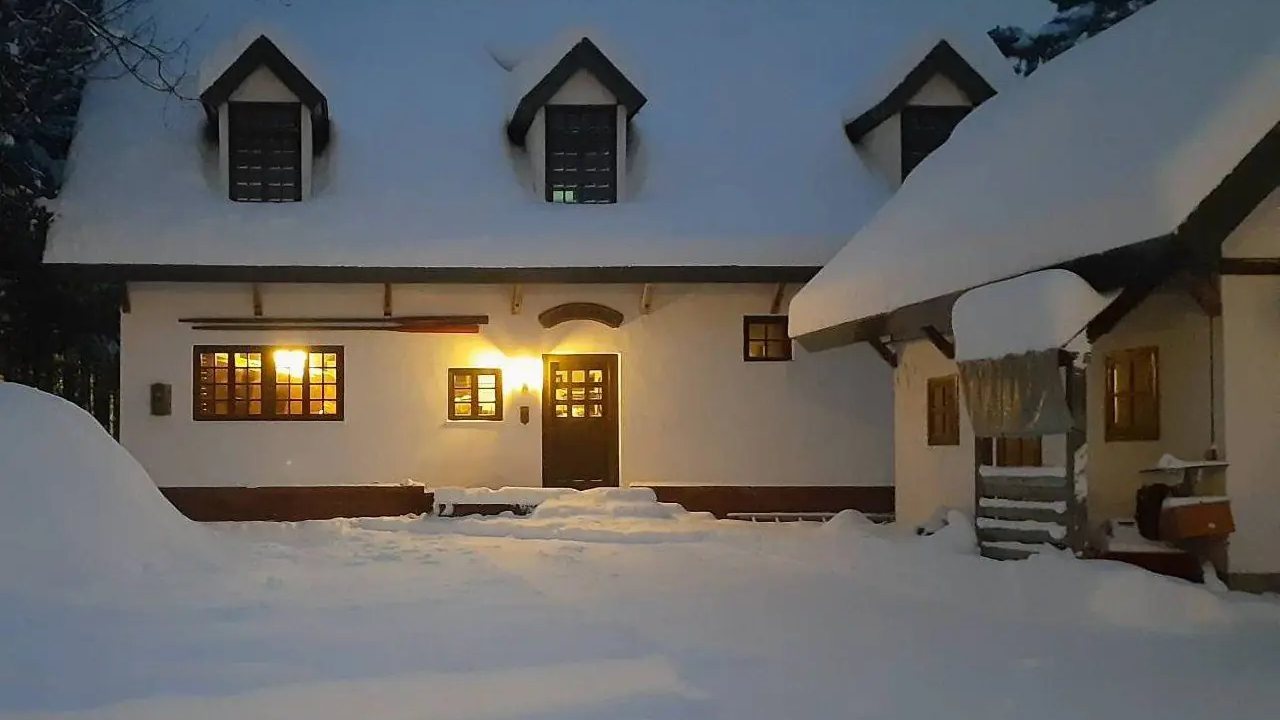
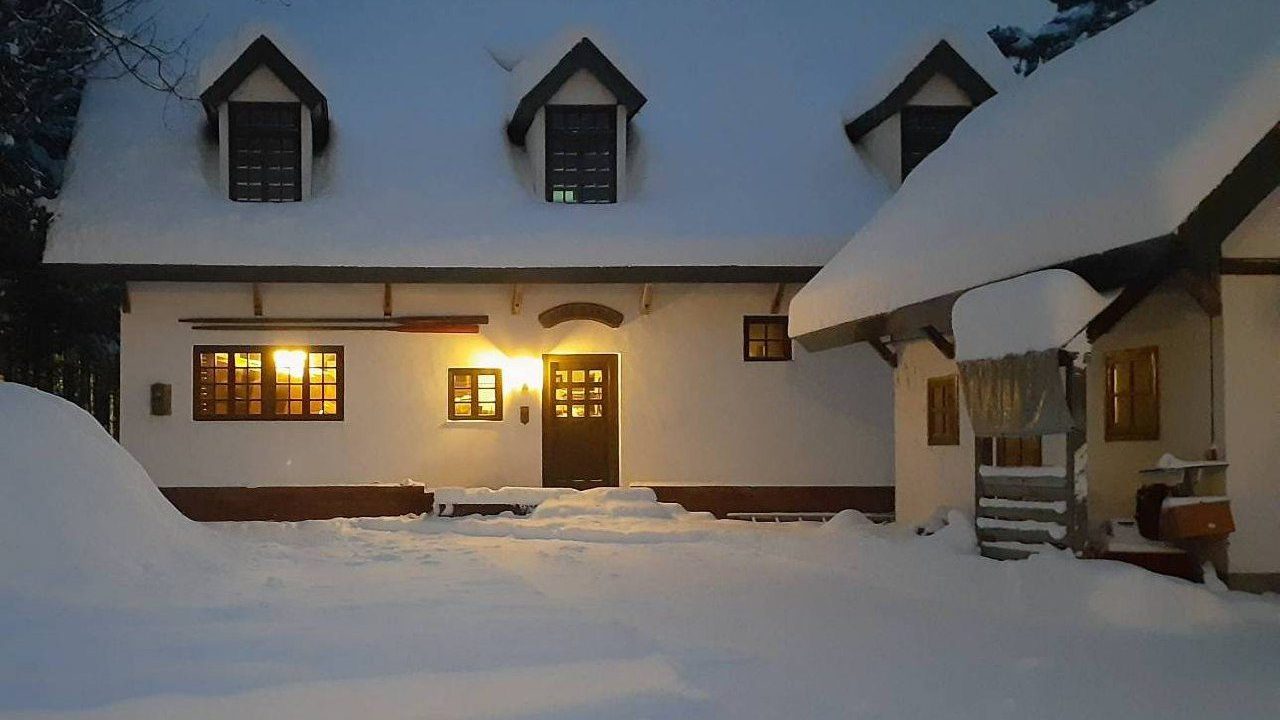
This guide is general information, not tax advice. For your own bill, ask the Hakuba Village tax section (+81-261-85-0712); for decisions, consult a tax accountant. The photo shows Maykiss, a whole-house rental owned by Gemini株式会社.
Last checked: 27 October 2026 (Hakuba Village tax pages, e-Gov statutes, MIC, MLIT)
Sources
- Hakuba Village: taxpayers, assets and exemption thresholds (JA)
- Hakuba Village: how land is taxed (JA)
- Hakuba Village: how buildings are taxed (JA)
- Hakuba Village: tax due dates (JA)
- Hakuba Village: Fixed Assets Tax (English PDF)
- Hakuba Village City Planning Tax Ordinance (Ordinance No. 7 of 1962), Art. 7 (JA)
- Local Tax Act (e-Gov), Enforcement Order (e-Gov), Enforcement Rules (e-Gov)
- MIC: fixed asset tax overview (JA)
- MLIT: tax reduction for new homes (JA)
Frequently asked questions
When does the Hakuba property tax bill arrive?
Hakuba's English guide says the tax notice is sent in April, the month of the first instalment. In fiscal 2026 the first instalment was due on 30 April 2026. For an owner moving abroad, the village describes the tax agent as receiving the notice in Japan.
Can someone other than family request a valuation certificate for me?
Yes. Along with the village's certificate application form, a person who is not a family member needs a letter of authorisation from you. Owners abroad who ask an agent in Japan to collect the certificate prepare this letter.
Related guides
-
Can Foreigners Buy Property in Hakuba? 2026 Buyer Guide
Can foreigners buy property in Hakuba? Yes. Here is the 2026 process, costs, the new non-resident reporting rule, land price data and Hakuba-specific checks.
-
Buying Land in Hakuba: What You Can Build and What to Check
Looking at Hakuba land for sale? Zoning, landscape and development rules, villa-area agreements, road access and what to check before you buy.
-

Hakuba Land Prices 2026: Official Data and How to Read It
Hakuba property prices in 2026: official MLIT land price and land survey figures for Hakuba points, what MLIT says drives them, and what to check before buying land.
-
Hakuba Airbnb Rules: Minpaku Limits vs an Inn Licence
Hakuba minpaku is capped at 180 nights a year, and parts of Kamishiro and Hokujo are restricted 1 Dec–31 Mar, with exceptions. How an inn licence compares.
-
Hakuba Accommodation Tax: Rates per Night & Chalet Guide
Hakuba accommodation tax is ¥200–¥1,900 per person per night on room charges of ¥6,000+ before consumption tax. Chalet examples, exemptions and owner rules.