
Self-Built Log House for Sale in Hokujo, Hakuba: 2LDK (HL-0013)
Category: Market & Investment
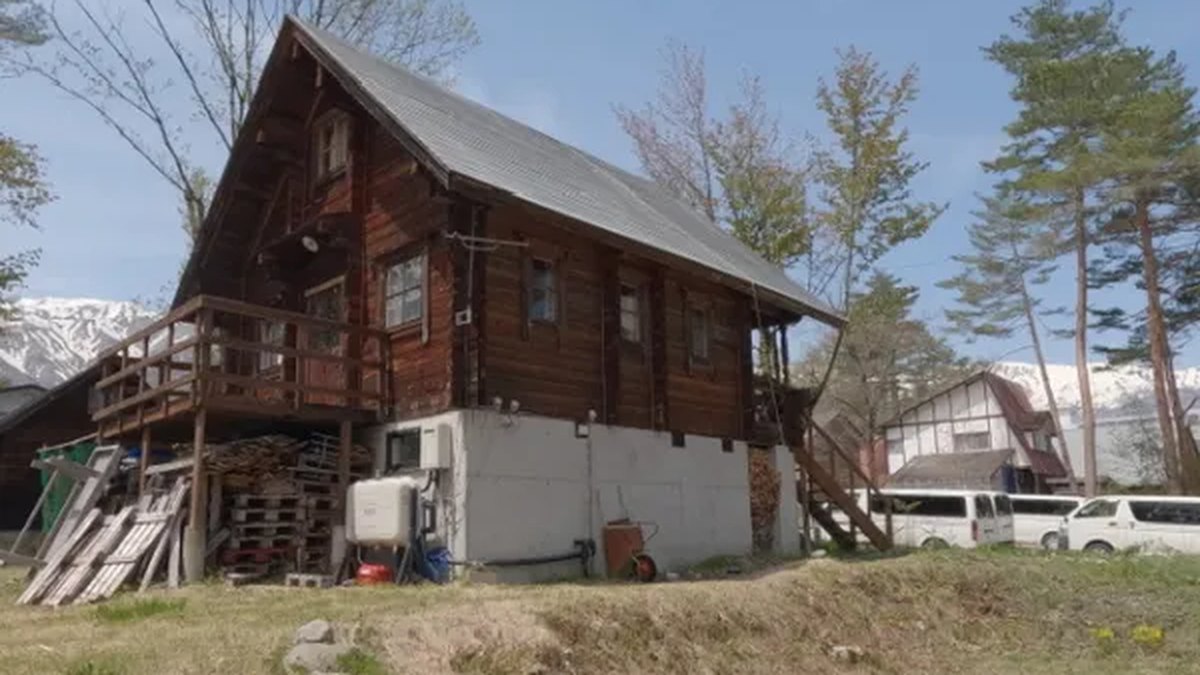
HL-0013 is a log house in Hokujo, Hakuba Village, listed as used lodging at ¥68,000,000. It was built in 1992, laid out as 2LDK with a loft, and stands on 370.00 m² of freehold land. It is vacant.
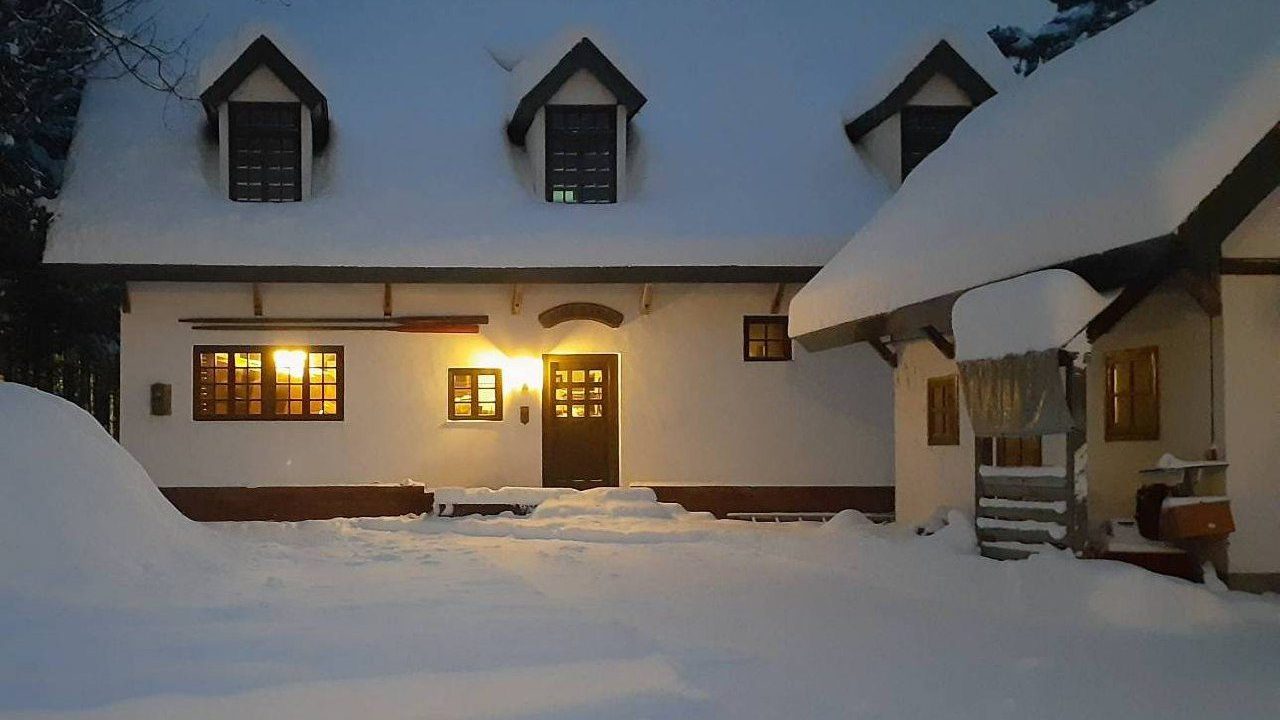
The photos show dark log walls under a steep gable roof, a wooden deck, and a pale grey ground floor. An outside timber staircase climbs to the entrance on the second floor. Inside, the living room opens up to the roof. The listing’s remarks add one line that shapes everything else: the house was self-built, only drawings exist, and the building’s title registration will be completed by handover. Hakuba Station is a 38-minute walk. This article sets out what the listing says and what to check before you offer.
See the full listing with photos and floor plan → HL-0013
HL-0013 at a glance
The table shows the listing details for this property (checked 2 November 2026).
| Item | Listing details |
|---|---|
| Price | ¥68,000,000 |
| Property type | Used lodging (property name: “pre-owned log house”) |
| Layout | 2LDK: living-dining room approx. 15 tatami, two Western-style rooms approx. 3 tatami each; loft room with a partition |
| Structure | Timber; self-built, drawings only |
| Building area | Not shown; to be fixed by the title registration before handover |
| Land | 370.00 m², freehold; land category wilderness (genya) |
| Built | 1992 |
| Planning | Non-delineated city planning area, no use zone; coverage 60%, floor area ratio 200% |
| Road | East: 4 m public road, frontage 24 m; no private-road share |
| Parking | 3 cars |
| Fittings | 2 toilets, wooden deck, terrestrial digital TV; main light from the south |
| Access | JR Oito Line, Hakuba Station, 38 min walk |
| Status | Vacant; handover by arrangement; sold as is |
| Transaction | Brokerage |
The asking price works out to about ¥184,000 per m² of land. That is simple division, not a valuation.
The house: living upstairs, utility rooms below
The remarks describe two floors. The first floor holds a storeroom, a drying room, the bathroom and the washroom. The second floor holds the entrance, the living-dining room of about 15 tatami and two Western-style rooms of about 3 tatami each. Above them is a loft room with a partition. There are two toilets.
The photos match that order. Wood lines the walls and ceilings, the living room rises into an open ceiling, and a railed gallery looks down from the loft. The drying room downstairs has a stove with a flue pipe, useful for wet ski gear. Outside, the wooden deck faces the main south light. No renovation is listed.
With the entrance upstairs, everyone arrives by the outside staircase. In a Hakuba winter that staircase needs clearing and a safe surface, so look at it closely on a viewing.
Self-built: registration and building records first
This is the point to settle before price. The listing says the house was self-built, that only drawings are available, and that the title registration will be completed by handover. In other words, the building is not yet in the land registry.
- Title registration: under the Real Property Registration Act, whoever acquires a building with no title registration must apply for one within one month (Article 47) (Real Property Registration Act, e-Gov). The seller’s promise to register before handover keeps that off your desk. Put the promise and its deadline into the contract, and check the registered floor area and structure against the drawings.
- Building confirmation: the land sits in a city planning area, where a building needs building confirmation before work starts (Building Standards Act, Article 6(1)(iii)) (Building Standards Act, e-Gov). Ask whether a confirmation certificate and a completion inspection certificate exist. Their absence can matter for a loan, for later extensions and for any change of use.
- Drawings: ask for the full set, and have an architect compare them with the building as it stands.
If you plan to borrow, ask the bank early which documents it needs.
Lodging use: sort out the licence first
The property type is used lodging. The listing does not state whether an inn-business licence exists, its number or its holder, and we do not add one. Under the Inns and Hotels Act, paid lodging needs a prefectural licence (Article 3), and taking over an existing operator’s position needs the governor’s approval (Article 3-2) (Inns and Hotels Act, e-Gov). Ask the seller how the house has been used, and consult Hakuba Village and the Omachi public health centre before signing. Lodging use also brings fire safety requirements, so ask the local fire department.
If you plan only a minpaku notification, it is capped at 180 nights a year, and Nagano Prefecture restricts winter operation in some areas, so check the exact address (Nagano Prefecture). For the two routes side by side, see Minpaku vs ryokan licence in Hakuba.
A 1992 log house: what to inspect
The house dates from 1992, after Japan’s June 1981 seismic standard. MLIT recommends checking the joints of new-standard timber houses built before 2000 (MLIT: verification method for new-standard timber houses). That method is written for conventional post-and-beam houses. This one is named a log house, so ask an architect who knows log construction which check fits. Plan to:
- inspect the log walls, roof, deck and outside staircase, and the ground floor beneath;
- confirm how water is supplied and how drainage works, since the listing does not say;
- check the drying-room stove, the heating and the propane equipment;
- remember the sale is as is: read what the contract says about liability for defects, and budget for repairs.
The land: 370 m², registered as wilderness
The land has 24 m of frontage on a 4 m public road to the east, with no private-road share. It sits in a non-delineated city planning area with no use zone, and no National Land Use Planning Act notification is required. Ask the village how the road is classed.
The land category is registered as wilderness (genya), yet a house stands on it. When a land category changes, the registered owner must apply to register the change within one month (Real Property Registration Act, Article 37) (Real Property Registration Act, e-Gov). Since the building is being registered anyway, ask the seller and a judicial scrivener whether the land category should be changed at the same time, and who does it.
Holding costs and the market
- Yearly costs: property tax, propane, heating and snow clearing, including the outside staircase. See Buying a house in Hakuba: yearly running costs.
- Property tax: the building has no registration yet, so ask the seller for the latest tax notices and how the building is assessed. See Hakuba property tax.
- Accommodation tax: Hakuba Village has charged an accommodation tax since 1 June 2026 (Hakuba Village). See Hakuba accommodation tax.
- Purchase costs: on top of the price, allow for registration fees, stamp duty, the pro-rated property tax and the brokerage fee.
In MLIT’s 2026 official land prices, residential land in Hakuba Village rose 22.8% on average (MLIT: 2026 official land prices, Hakuba). Official prices are benchmarks for set survey points and cannot be compared directly with this asking price.
Checklist before you offer
- Registration: the seller’s title registration before handover, written into the contract with a deadline; the land category.
- Records: drawings, building confirmation and completion inspection certificates.
- Building: log walls, roof, deck, outside staircase, stove, water and drainage.
- Licence: how the house has been used, and which route fits your plan (seller, Hakuba Village, Omachi public health centre).
- Contract: the as-is terms, defect liability and handover date.
- Overseas buyers: see Can foreigners buy property in Hakuba?
About this listing
Hakuba Land is a brand of Gemini株式会社, a licensed real estate brokerage acting as broker for this property. The listing was published on 12 May 2026, with the next update due on 15 November 2026. The listing gives no revenue or occupancy figures, and neither does this article. This article is general information, not legal or tax advice.
Last checked: 2 November 2026.
Sources
- Real Property Registration Act, Articles 37 and 47 (e-Gov, Japanese)
- Building Standards Act, Article 6 (e-Gov, Japanese)
- Inns and Hotels Act, Articles 3 and 3-2 (e-Gov, Japanese)
- Nagano Prefecture: minpaku restriction areas (Japanese, PDF)
- MLIT: seismic verification method for new-standard timber houses (Japanese)
- Hakuba Village: accommodation tax (Japanese)
- MLIT: 2026 official land prices, Hakuba Village (Japanese)
Frequently asked questions
How much is HL-0013 and what do you get?
The asking price is ¥68,000,000. It covers a timber log house built in 1992, laid out as 2LDK (a living-dining room of about 15 tatami and two Western-style rooms of about 3 tatami each) plus a partitioned loft room, on 370.00 m² of freehold land registered as wilderness land (genya). The listing shows parking for 3 cars.
What does 'self-built' mean for a buyer?
The listing says the house was self-built, that only drawings are available, and that the building's title registration will be completed by handover. Ask for the drawings, ask whether building confirmation and completion inspection records exist, and write the registration promise and its deadline into the contract.
Can I run it as lodging straight away?
Don't assume so. The property type is used lodging, but the listing does not say whether an inn-business licence exists, its number or its holder. Under the Inns and Hotels Act a buyer needs a new licence or the governor's approval to take over a business. Check with the seller, Hakuba Village and the Omachi public health centre before signing.
When is handover?
The house is vacant. The listing says handover is by arrangement and the property is sold as is.
Related guides
-
Buying a House in Hakuba: Yearly Running Costs and Checks
Buying a house or chalet in Hakuba? See the yearly running costs from official tariffs, the winter work an absent owner must arrange, and what to check first.
-
Hakuba Airbnb Rules: Minpaku Limits vs an Inn Licence
Hakuba minpaku is capped at 180 nights a year, and parts of Kamishiro and Hokujo are restricted 1 Dec–31 Mar, with exceptions. How an inn licence compares.
-
Japan Property Tax for Foreigners: A Hakuba Owner's Guide
Hakuba property tax is 1.4% of the taxable base, not the price. Assessed values, why legal holiday homes miss land relief, and tax agents abroad.
-
Hakuba Accommodation Tax: Rates per Night & Chalet Guide
Hakuba accommodation tax is ¥200–¥1,900 per person per night on room charges of ¥6,000+ before consumption tax. Chalet examples, exemptions and owner rules.
-
Can Foreigners Buy Property in Hakuba? 2026 Buyer Guide
Can foreigners buy property in Hakuba? Yes. Here is the 2026 process, costs, the new non-resident reporting rule, land price data and Hakuba-specific checks.